
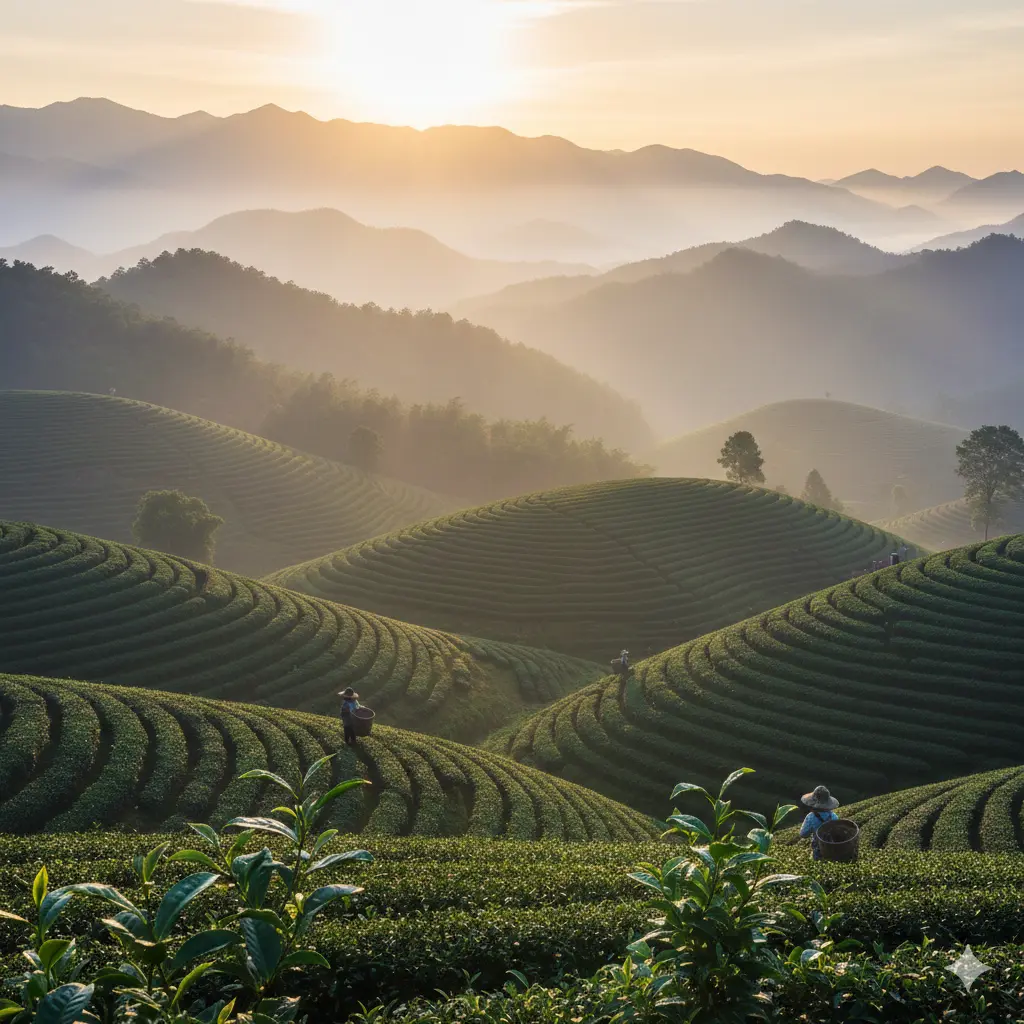
Explore how altitude, climate, and soil composition create the distinct flavor profiles that define the world's greatest teas.
Just as wine lovers speak of terroir, tea connoisseurs recognize that geography is destiny. The concept of 'cha qi' in Chinese tea culture acknowledges that a tea's character comes from its place of origin.
High-altitude teas, like Darjeeling from the Himalayan foothills or Taiwanese high-mountain oolong, develop complex flavors due to slower growth, cooler temperatures, and increased UV exposure. These teas often display floral, muscatel notes with exceptional clarity. Meanwhile, low-altitude teas from tropical regions like Assam produce robust, malty flavors with higher caffeine content.
Soil composition matters tremendously—volcanic soils in Java produce teas with mineral undertones, while the yellow earth of Fujian creates the distinctive terroir of white teas. Mist, rainfall patterns, and seasonal temperature variations all contribute to the final cup. This is why a Longjing from one valley tastes noticeably different from another just kilometers away.
Explore Our Premium Tea Collection
Ready to put your tea knowledge into practice? Browse our carefully curated selection of premium teas from the world's finest gardens.